
Direct answer
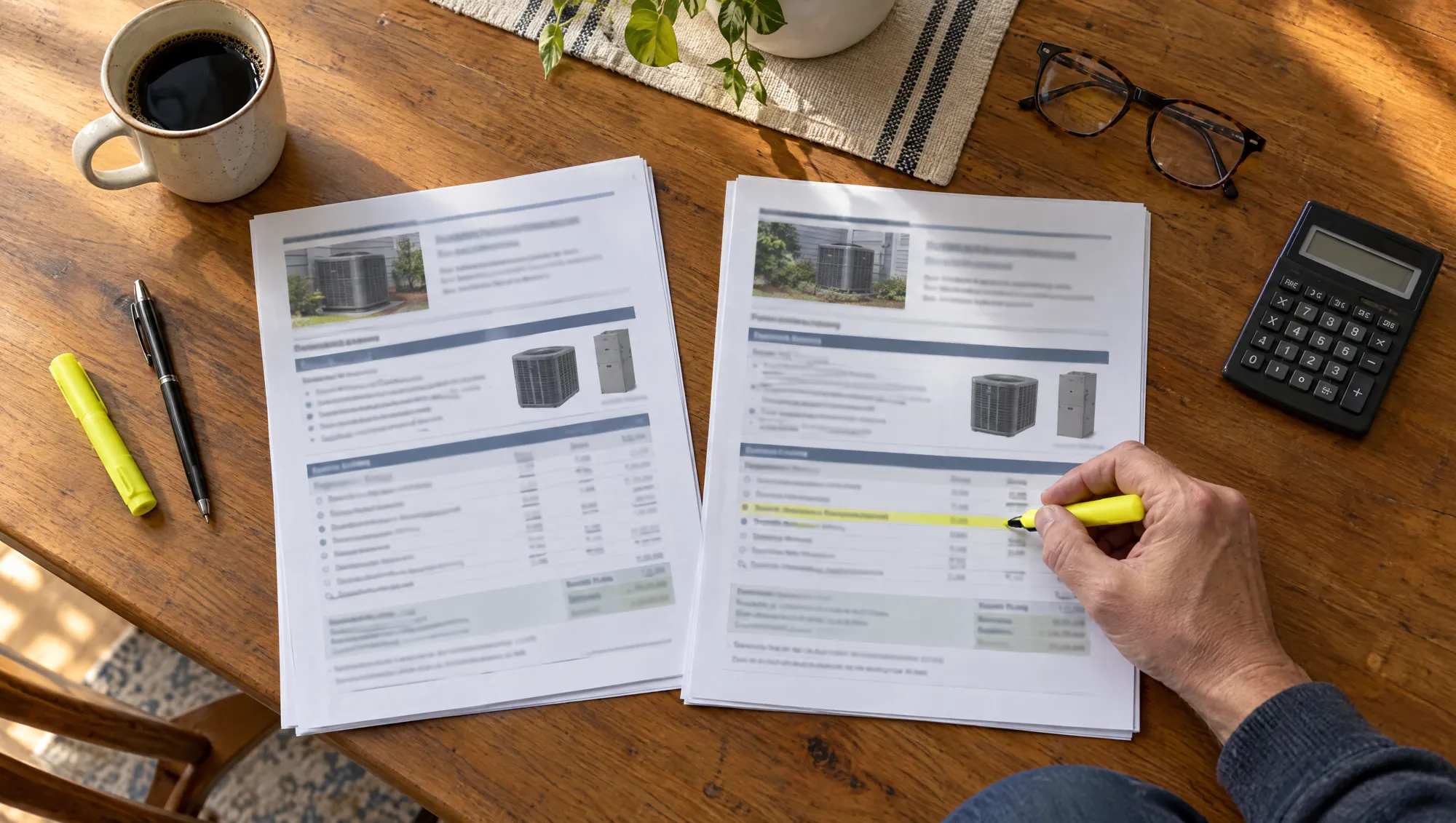
A defensible DFW HVAC replacement starts with the home and the complete heating-and-cooling configuration, not a preferred badge or an automatic swap for the old capacity. Document the reason replacement is being considered, heating and cooling loads, room problems, ducts, filter and return paths, fuel and electrical constraints, drainage, venting, controls, site access, and ownership horizon. Then compare exact equipment and written scopes for AC plus furnace, heat pump plus electric backup, or dual fuel. Keep cash price separate from financing, verify the Texas contractor and local permit path, and require commissioning and closeout records.
Key takeaways
- Size from documented home loads and conditions, not only square footage, old equipment, or sales-package labels.
- Compare complete heating-and-cooling configurations, including backup heat, ducts, controls, fuel, electrical, venting, drainage, and site work.
- Verify exact models, certified performance where applicable, permits, startup readings, warranties, exclusions, cash price, and financing before signing.
Follow the replacement path in order
First verify the repair diagnosis and decide whether replacement belongs in the comparison. Next document heating and cooling loads, ducts, room problems, and system configuration. Compare AC and furnace, heat pump and electric backup, or dual-fuel options only after those facts are visible. Then normalize written proposals, interview the installer, verify models and controls, and close the project with measured startup and records.
Sources: [energy-star-furnaces], [energy-star-heat-pumps], [energy-star-quality]
Put home loads, ducts, and room goals before equipment tier
Ask for documented heating and cooling loads, design assumptions, room-level concerns, return and supply conditions, filter pressure, duct leakage or static-pressure findings, and planned corrections. Equipment that is too large or paired with restrictive distribution can cycle poorly, create noise, leave room imbalance, and fail to deliver rated performance. Home and duct improvements can change the required capacity, so write down what the selection assumes will be completed.
Sources: [energy-star-quality], [energy-star-furnaces], [energy-star-heat-pumps]
Normalize exact models and complete site scope
Every proposal should identify all indoor and outdoor models, capacities and ratings, furnace output or heat-pump backup, blower, filter, thermostat, zoning, ducts, line set, refrigerant, electrical, gas, venting, condensate, drains, pad or platform, access, protection, removal, cleanup, permit, inspection, startup, warranties, exclusions, allowances, cash price, and financing. Use AHRI records where certified combination data applies. A lower total may simply exclude necessary work.
Sources: [energy-star-quality], [ahri-directory], [tdlr-acr]
Commission the installed system and close the record
Startup should verify the intended heating and cooling sequences, thermostat and zoning, airflow and static pressure, temperature performance, refrigerant setup where applicable, combustion and venting where applicable, backup heat, defrost, drains, safeties, and shutdown. Keep the permit and inspection result where required, installed model and serial numbers, AHRI certificate where applicable, warranty registrations, manuals, filter specification, final settings, startup readings, and paid scope.
Sources: [energy-star-quality], [energy-star-maintenance], [ahri-directory], [tdlr-acr]
Frequently asked questions
Should I replace the furnace and AC together?
Not automatically. Compare age, condition, compatibility, shared blower and coil integration, certified match where applicable, warranty, labor overlap, controls, and the risk of preserving an older component. Require separate and combined scopes.
Is a heat pump a good option in DFW?
It can be, but compare exact low-temperature capacity, backup heat, electrical demand, controls, ducts, tariffs, fixed charges, incentives, maintenance, and ownership horizon against the full AC and furnace alternative.
Can a contractor size replacement equipment from square footage?
Square footage alone is not enough. Ask for a documented home-specific heating and cooling load with construction, windows, infiltration, insulation, ducts, orientation, and design conditions.
What proves the equipment was installed correctly?
Require a commissioning record with system-specific airflow, static pressure, controls, temperatures, refrigerant, combustion, venting, backup heat, drains, safeties, and final operation as applicable.
Should I choose the lowest replacement price?
Only after confirming every proposal describes the same required job. Compare inclusions, exclusions, allowances, warranties, permit responsibility, startup, cash price, and financing total before ranking price.
Continue your decision
Sources
- ENERGY STAR, FurnacesFederal furnace efficiency, AFUE, home-envelope, duct-sealing, and maintenance guidance.
- ENERGY STAR, Air-Source Heat PumpsFederal heat-pump system, efficiency, sizing, installation, controls, backup-heat, and homeowner guidance.
- ENERGY STAR, HVAC Quality InstallationFederal guidance on home-specific sizing, ducts, airflow, and refrigerant charge.
- ENERGY STAR, Heating and Cooling Maintenance ChecklistFederal pre-season, homeowner, electrical, control, airflow, combustion, and heat-exchanger checklist.
- AHRI Directory of Certified Product PerformancePublic verification for certified air-source heat-pump, air-conditioning, and residential-furnace product data.
- Texas Department of Licensing and Regulation, Air Conditioning and Refrigeration ContractorsOfficial Texas HVAC and heating contractor licensing, rules, search, and complaint portal.