
- Start with the situation, not the equipment guess
- Identify what heats the home
- Use a firm safety gate before troubleshooting
- Understand what DFW winter actually asks of the system
- Know what you can check without opening equipment
- Turn the symptom into a measured service visit
- Treat airflow and the house as part of heating
- Plan repair and replacement without a shortcut rule
- Verify the contractor, jurisdiction, and closeout record
Direct answer
On a cold morning, the first question is not ‘Do I need a new system?’ It is ‘What kind of heat do I have, is anything unsafe, and what is the system actually doing?’ This guide helps you identify the setup, separate a safety problem from an ordinary no-heat call, record what you can safely observe, and decide what to ask for next. DFW winters may be shorter than in colder states, but a gas furnace, heat pump, electric air handler, and dual-fuel system each need a different troubleshooting and repair conversation.
Key takeaways
- Identify the heating configuration before interpreting thermostat messages, outdoor-unit operation, or backup heat.
- Gas odor, a carbon-monoxide alarm, fire, smoke, arcing, energized water, and repeated breaker trips are stop conditions, not DIY troubleshooting prompts.
- DFW winters are short compared with northern climates, but official records still show freezes and occasional severe cold, so capacity, backup, controls, and maintenance matter.
- Ask for measurements, the cause of failure, warranty status, complete scope, and a successful heating-cycle test before authorizing major work.
Start with the situation, not the equipment guess
Choose the path that matches what is happening now. The no-heat guide starts with urgent safety and safe observations. The heat-pump guide explains cooler-feeling supply air, frost, defrost, auxiliary heat, and emergency heat. The furnace replacement guide covers load-based sizing, AFUE, staging, blower and cooling compatibility, venting, permits, and closeout records. The winter checklist organizes work before DFW's first freeze and keeps homeowner tasks outside closed equipment.
Sources: [nws-dfw-freeze], [energy-star-maintenance]
Identify what heats the home
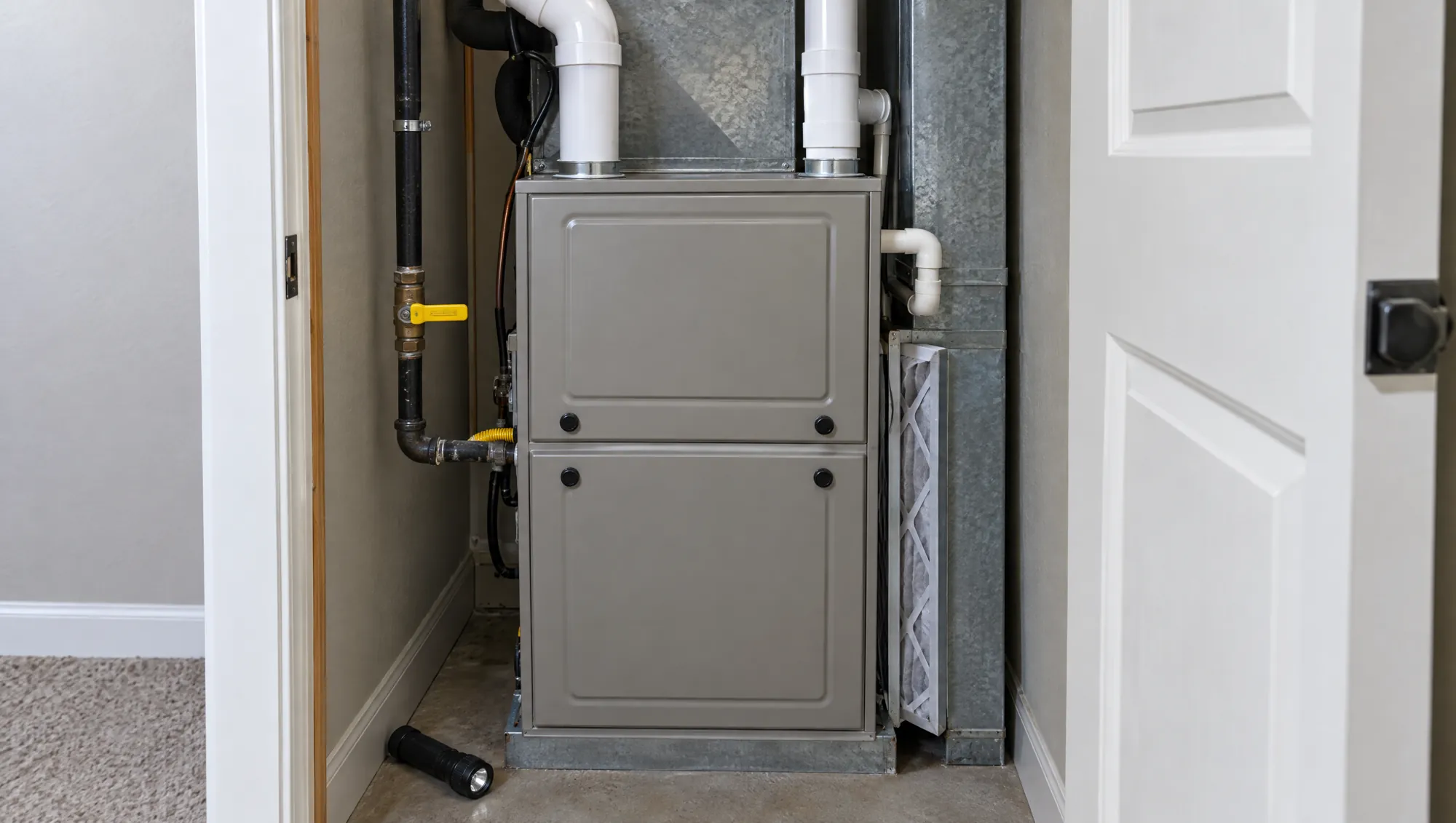
Do not rely on the thermostat label alone. Photograph the thermostat and the model plates on safely accessible equipment without removing a panel. A gas furnace has fuel piping and combustion venting. An electric furnace or air handler can use resistance heat strips. A heat pump uses an outdoor refrigeration unit in both summer and winter and normally has backup heat. Dual fuel pairs a heat pump with a gas furnace. A packaged system may combine heating and cooling outdoors. These are common DFW configurations, not an exhaustive list. Boilers, hydronic heat, geothermal systems, ductless heat pumps, and other arrangements require their own equipment documentation and qualified diagnostic path. Exact model documentation matters because the same-looking thermostat or outdoor cabinet can be configured several ways.
| Configuration | Primary winter operation | Evidence to collect |
|---|---|---|
| Gas furnace plus central AC | Burns gas and moves heated air through ducts | Furnace and AC model plates, fuel and vent type, thermostat stages |
| Heat pump plus electric backup | Outdoor unit transfers heat; electric strips assist when controls call | Outdoor and indoor models, thermostat AUX or EM HEAT indicators, strip-heat size |
| Dual fuel | Heat pump runs under selected conditions; gas furnace takes over under control logic | Both model numbers, thermostat or controller, lockout and changeover settings |
| Electric furnace or resistance heat | Electric elements generate heat indoors | Indoor model, heat-kit data, breaker and service information |
| Packaged unit | Heating and cooling components share an outdoor cabinet | Package model, fuel type, thermostat, duct connection and access |
Sources: [doe-hvac-homeowner-guide], [energy-star-heat-pumps], [energy-star-furnaces]
Use a firm safety gate before troubleshooting
Leave immediately for a suspected gas leak and call 911 and the serving gas utility from a safe location. Treat a carbon-monoxide alarm as an emergency and follow the alarm and emergency-responder instructions. Leave for fire, smoke, or active arcing. Stay away from water touching electrical equipment. If a breaker trips again after one safe reset, stop resetting it. Do not relight burners, bypass a door switch or rollout switch, open service panels, probe voltage, touch capacitors, handle refrigerant, or alter gas, vent, flue, drain, control, or safety components.
- Suspected gas: get everyone out first, then call from outside
- CO alarm or possible CO illness: move to fresh air and call 911
- Fire, smoke, or arcing: leave and call 911
- Water at electrical equipment or a repeated breaker trip: keep away and get qualified help
- No immediate hazard: continue only with thermostat, filter, grille, and visual observations
Sources: [atmos-gas-safety], [cdc-carbon-monoxide], [epa-carbon-monoxide], [tdlr-acr]
Understand what DFW winter actually asks of the system
Mild averages can hide the nights that determine whether a system, backup source, and control sequence are adequate. The National Weather Service's DFW record lists 19 freezes and a 13°F winter low for 2025–2026. The 2020–2021 season reached -2°F. Those figures do not size a particular home and do not predict the next winter. They do show why a DFW plan should document heating load, low-temperature heat-pump capacity, backup capacity, fuel or electrical constraints, duct delivery, thermostat staging, and a safe outage plan instead of treating heat as an afterthought to cooling.
Sources: [nws-dfw-freeze], [energy-star-heat-pumps], [energy-star-quality]
Know what you can check without opening equipment
Set the thermostat to HEAT and choose a setpoint above room temperature. Confirm the display, mode, fan setting, schedules, holds, error messages, and whether AUX or EM HEAT appears. Inspect a safely accessible filter and open supply and return grilles. From a safe distance, observe the indoor and outdoor units, airflow, sound, odor, frost, steam, and visible water. If there is no danger and a breaker is tripped, one reset is the limit. Record what happens through one normal call for heat. Stop before any panel, wiring, burner, gas valve, vent, refrigerant line, internal drain, or safety control.
Sources: [doe-hvac-homeowner-guide], [energy-star-maintenance], [tdlr-acr]
Turn the symptom into a measured service visit
Tell dispatch which system type you believe you have, the thermostat reading and mode, indoor and outdoor temperatures, whether airflow exists, which units run, any code or indicator, and every odor, sound, frost, water, or breaker event. Ask the technician to identify the exact failed function, show the measurements or observations that support it, compare them with the applicable manufacturer information, explain the likely cause, check warranty status, and provide written repair and replacement options only when both are reasonable. A confident conclusion without tested evidence is not stronger because the weather is cold.
Sources: [energy-star-maintenance], [tdlr-acr]
Treat airflow and the house as part of heating
A furnace or heat pump can produce heat and still leave rooms uncomfortable when the filter, blower setup, return path, ducts, leakage, insulation, or air sealing limits delivery or raises the load. Ask how airflow was evaluated, whether static pressure was measured, what the filter contributes, and whether room imbalance points to a distribution problem. Correcting equipment without documenting the home and ducts can preserve the same cold rooms. Weatherization can also change the required heating load, which is one reason DOE advises improving the home and sizing replacement equipment to actual conditions.
Sources: [doe-hvac-homeowner-guide], [energy-star-furnaces], [energy-star-quality]
Plan repair and replacement without a shortcut rule
An isolated repair with a verified diagnosis, useful warranty, clean safety findings, and otherwise acceptable performance can favor repair. Replacement deserves a full comparison when failures repeat, a major component or heat exchanger is involved, venting or combustion safety is unresolved, the equipment is materially oversized, parts or refrigerant constraints matter, or a repair would preserve substantial comfort and reliability problems. Do not let age alone decide. Compare the complete repair, the complete replacement, the risks each option leaves behind, and the time you expect to own the home.
Sources: [energy-star-furnaces], [energy-star-quality], [ahri-directory]
Verify the contractor, jurisdiction, and closeout record
Texas says contractors who install, repair, or maintain heating and air-conditioning systems must operate under TDLR requirements. Match the legal seller and responsible license to the proposal. Then confirm permit and inspection requirements with the authority for the property's address and exact scope. After work, keep the diagnosis, authorization, final invoice, installed model and serial numbers, permit and inspection record where required, warranty registrations, thermostat settings, maintenance instructions, and startup measurements. Heating is not finished when warm air appears; it is finished when the safe operating sequence and paperwork are closed.
Sources: [tdlr-acr], [ahri-directory]
Frequently asked questions
Do DFW homes really need a heating plan?
Yes. North Texas winters are shorter than northern winters, but official DFW records still show recurring freezes and occasional severe cold. The plan should cover equipment type, heating and backup capacity, thermostat logic, maintenance, safety, and outages.
How can I tell whether I have a heat pump or an AC?
Check the outdoor model number and manufacturer documentation, not appearance alone. A thermostat with AUX HEAT or EM HEAT is a strong clue, but exact indoor, outdoor, and control model numbers provide better confirmation.
Should my heat-pump outdoor unit run in winter?
Usually yes. A heat pump uses the outdoor unit to move heat indoors. It may temporarily change sound or produce steam during defrost. A central AC paired with a gas furnace normally does not use the outdoor unit for heating.
Is a gas smell an HVAC service call?
It is a safety event first. Leave immediately, then call 911 and the serving gas utility from a safe location. Do not stay inside to identify the source.
Does an old furnace automatically need replacement?
No. Age is one factor. The measured condition, safety findings, failure history, warranty, efficiency, sizing, venting, ducts, repair scope, and unresolved risks should drive the comparison.
Can the same ducts cause heating and cooling problems?
Yes. The blower, filter, return paths, ducts, leakage, registers, and room loads affect both seasons. A replacement quote should explain how the proposed equipment will move the required airflow through the actual system.
Continue your decision
Sources
- National Weather Service Fort Worth/Dallas, DFW Freeze Data and Cold-Season TemperaturesOfficial seasonal freeze counts, threshold dates, and winter lows for the DFW climate record.
- U.S. Department of Energy, HVAC: A Guide for Contractors to Share with HomeownersOfficial homeowner guide to heating and cooling system types, efficiency, sizing, ducts, installation, and maintenance.
- ENERGY STAR, FurnacesFederal furnace efficiency, AFUE, home-envelope, duct-sealing, and maintenance guidance.
- ENERGY STAR, Air-Source Heat PumpsFederal heat-pump system, efficiency, sizing, installation, controls, backup-heat, and homeowner guidance.
- ENERGY STAR, Heating and Cooling Maintenance ChecklistFederal pre-season, homeowner, electrical, control, airflow, combustion, and heat-exchanger checklist.
- ENERGY STAR, HVAC Quality InstallationFederal guidance on home-specific sizing, ducts, airflow, and refrigerant charge.
- U.S. Consumer Product Safety Commission, Home Heating EquipmentOfficial annual professional inspection guidance for fuel-burning heating equipment, chimneys, flues, and vents.
- U.S. Environmental Protection Agency, Carbon Monoxide DetectorsOfficial explanation of CO alarms as backup, not a substitute for correct installation and maintenance.
- Centers for Disease Control and Prevention, Carbon Monoxide Poisoning BasicsOfficial CO sources, symptoms, alarm, appliance-service, generator, and emergency-safety guidance.
- Atmos Energy, Home Safety and Suspected Natural Gas LeaksServing-utility instructions to leave immediately and call 911 and Atmos Energy from a safe location when gas is suspected.
- Texas Department of Licensing and Regulation, Air Conditioning and Refrigeration ContractorsOfficial Texas HVAC and heating contractor licensing, rules, search, and complaint portal.
- AHRI Directory of Certified Product PerformancePublic verification for certified air-source heat-pump, air-conditioning, and residential-furnace product data.